
When Biology Drives Healthcare Innovation
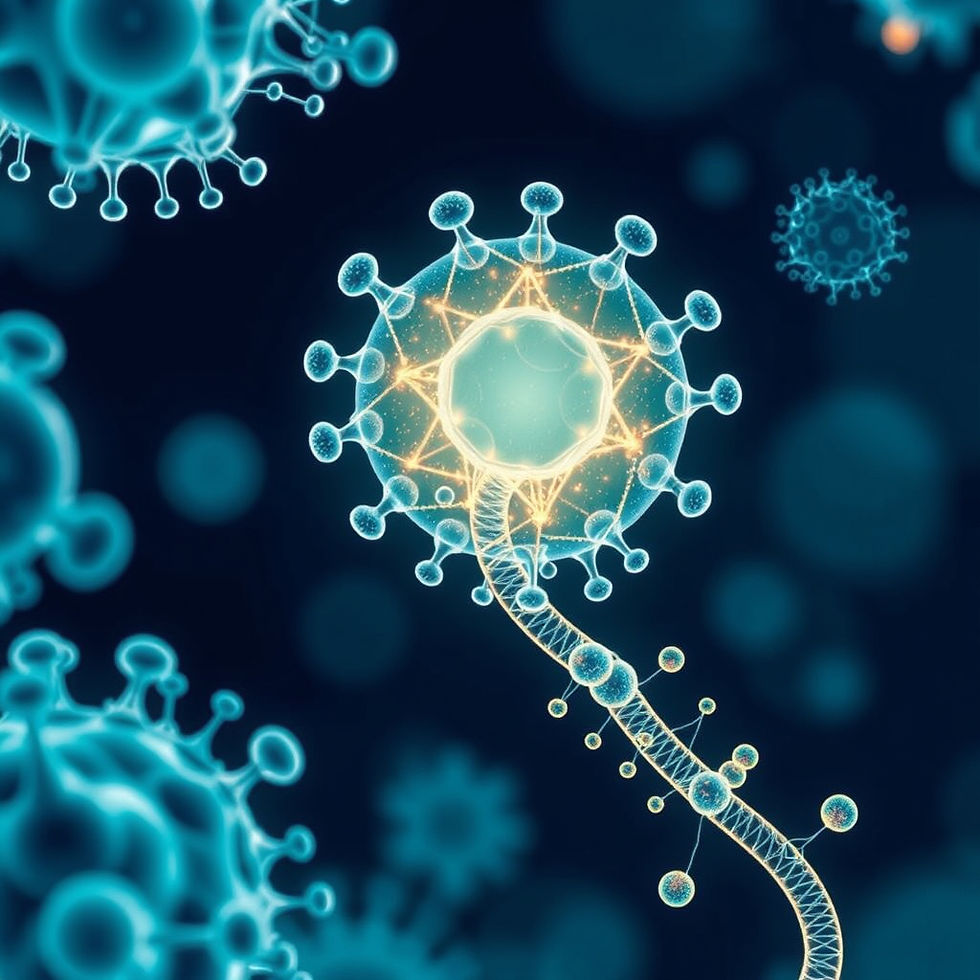
Healthcare is no longer driven by medicine alone. Today’s biggest breakthroughs happen where medical technology meets bioscience, where software, sensors, data, and engineering work hand-in-hand with biology, genetics, and human physiology. This convergence is transforming how we diagnose, treat, monitor, and even prevent disease.
From AI-powered imaging to gene editing, wearable biosensors, and immersive training tools, the line between laboratory science and clinical technology is rapidly disappearing.
AI + Imaging: Smarter, Faster Diagnosis
Artificial intelligence trained on vast imaging datasets now helps clinicians detect patterns invisible to the human eye. In radiology and pathology, algorithms can flag early tumors, micro-fractures, or cellular abnormalities within seconds.
Clinical systems from GE HealthCare and Siemens Healthineers embed AI directly into MRI, CT, and digital pathology workflows, reducing diagnostic time while improving accuracy.
Impact: Earlier detection, fewer missed diagnoses, and more consistent clinical decisions.
Wearable Biosensors: Continuous Health Data
Wearables have evolved from step counters into clinical-grade biosensors. Devices from Apple and Fitbit can track ECG rhythms, oxygen saturation, sleep cycles, and activity levels in real time.
For chronic conditions like diabetes, continuous glucose monitors stream live data to apps and physician dashboards, enabling preventive care instead of reactive treatment.
Impact: Real-time monitoring, fewer hospital visits, empowered patients.
Genomics and Gene Editing: Treating Disease at the Source
Advances in genomics allow clinicians to tailor treatments based on a patient’s DNA. With tools like CRISPR, scientists can modify faulty genes responsible for inherited diseases.
Sequencing platforms from Illumina make genome analysis faster and more affordable, enabling precision medicine for cancer, rare disorders, and autoimmune conditions.
Impact: Personalized therapies, higher success rates, fewer side effects.
Robotic and Minimally Invasive Surgery
Robotic platforms like the da Vinci Surgical System from Intuitive Surgical translate a surgeon’s hand movements into ultra-precise micro-motions. Procedures that once required large incisions now use keyhole entries, reducing trauma and recovery time.
Impact: Less pain, lower infection risk, faster recovery.
3D Bioprinting and Tissue Engineering
Researchers are exploring bioprinting living tissues using bio-inks made of cells and biomaterials. While full organ printing is still in development, skin, cartilage, and tissue patches are already being tested for reconstructive medicine.
Impact: Regenerative treatments, reduced transplant dependence.
Augmented Reality (AR) in Medical Training and Procedures
Augmented Reality is transforming how healthcare professionals learn and practice. AR headsets and overlays allow students and surgeons to visualize 3D anatomy layered onto real patients or mannequins during training.
Platforms like Microsoft HoloLens and solutions from Medivis enable interactive anatomy lessons, surgical simulations, and real-time guidance during procedures without risk to patients.
AR is also used for remote guidance, where experts can “see” what a trainee sees and provide live annotations.
Impact: Safer training, faster skill acquisition, improved surgical precision, and reduced learning curves.
The Data Backbone: Cloud, Interoperability, and Digital Twins
Behind these advances is data. Secure cloud systems unify imaging, genomic, wearable, and AR streams into comprehensive patient records. Researchers are also developing digital twins, virtual patient models used to simulate treatments before real-world application.
Impact: Safer treatment planning, predictive healthcare, system-wide efficiency.
What This Means for the Future of Care
The fusion of medical tech and bioscience is shifting healthcare from:
Reactive → Preventive
Generalized → Personalized
Hospital-based → Remote and continuous
Symptom treatment → Root-cause correction
Patients won’t just receive care when they’re sick—they’ll be continuously supported to stay well.
Final Thought
The future of healthcare lies in the integration of biology and technology. When bioscience discoveries are amplified by AI, robotics, smart devices, AR training, and unified data systems, medicine becomes more precise, humane, and proactive than ever before.


https://soicaulodechuan.mobi/soi-cau-mobi mình mở ra xem qua thì để ý ngay cái mục lục ở đầu bài, đỡ phải kéo xuống rồi đoán thông tin nằm chỗ nào. Mình hay đọc trên điện thoại nên có tên từng phần như vậy thấy dễ theo dõi hơn, nhất là lúc chỉ muốn ngó nhanh chứ không đọc hết. Không có gì quá lạ nhưng cách sắp xếp này khá hợp với kiểu đọc lướt của mình. Một điểm nữa là lịch mở thưởng được để thành phần riêng, có ghi miền Bắc quay lúc 18h15 hằng ngày nên lúc cần xem giờ cũng đỡ mất công tìm trong bài. Mình thích mấy chi tiết nhỏ, rõ ràng như thế hơn là lời…